Introduction
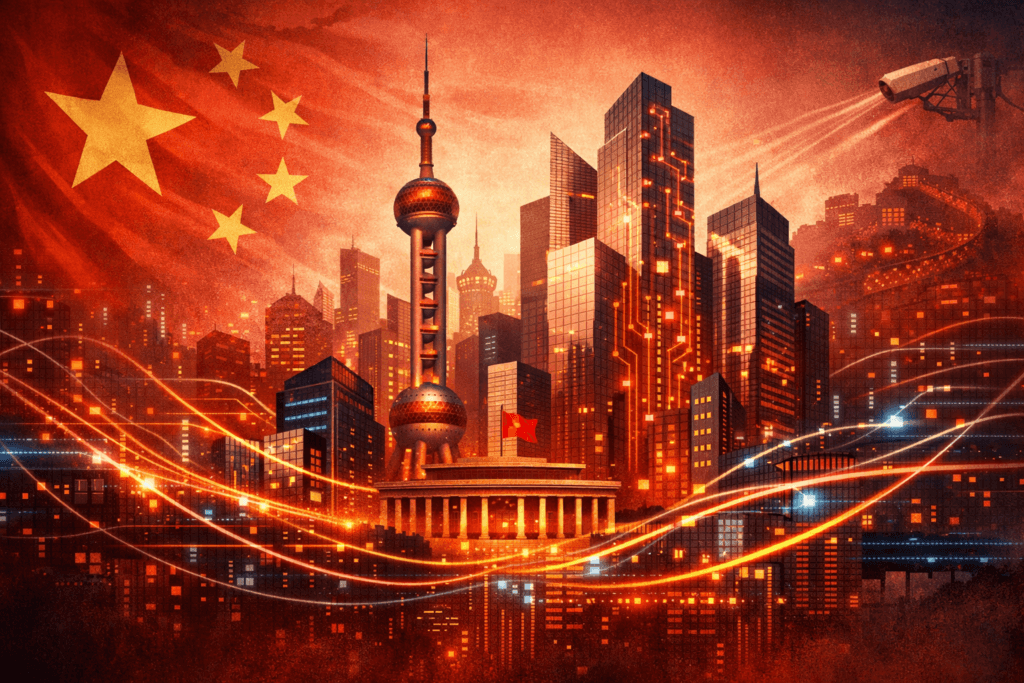
In recent decades, the rapid rise of the People’s Republic of China has reshaped global economic, political, and technological landscapes. As China has grown into the world’s second-largest economy and a central node in global supply chains, questions have intensified about the long-term implications of its development model for the rest of the world. One recurring concern is whether China’s trajectory could lead to a world dominated by large corporations, particularly corporations closely aligned with or subordinated to state power.
The idea that the Chinese government explicitly seeks a future in which corporations rule the world is not directly supported by most serious analyses or source material. Rather, what emerges from the literature is something more complex and arguably more troubling: a model of state-led capitalism combined with digital authoritarianism that could indirectly empower large, state-aligned corporations while weakening democratic institutions, individual autonomy, and competitive markets.

China’s strategy emphasises strong state control over key sectors, heavy investment in technology and infrastructure, and the fusion of political authority with economic and digital power. This approach is designed not only to accelerate domestic development but also to reshape global dependencies in China’s favour. As this model expands outward—through trade, investment, technology exports, and standards-setting—it has the potential to transform the global economic environment in ways that advantage large corporations closely tied to state interests, often at the expense of individuals and democratic norms. Get it as a podcast,

This article examines how China’s state-led economic and technological strategies may contribute to a world where large, state-aligned corporations hold disproportionate power. It examines the mechanisms of state capitalism, the role of technology and surveillance, the blurring of boundaries between state and corporate power, and the broader implications for global governance, individual rights, and economic fairness.

Understanding China’s State-Led Capitalist Model
China’s economic system is frequently described as “state capitalism,” though the term can obscure as much as it reveals. Unlike classical centrally planned economies, China allows market mechanisms, private enterprise, and foreign investment to operate across much of the economy. However, unlike liberal market economies, the Chinese Communist Party (CCP) retains ultimate authority over strategic direction, key industries, and political outcomes.

At the core of this system is the belief that markets are tools to be harnessed in the service of national goals rather than autonomous arenas governed by neutral rules. The state plays an active role in allocating capital, shaping industrial policy, directing technological development, and managing risk. State-owned enterprises (SOEs) remain dominant in sectors deemed strategically vital, such as energy, telecommunications, finance, transportation, and defence.
Even ostensibly private firms operate within a framework of political oversight. Party committees exist within companies, regulatory pressure can be applied selectively, and access to financing or markets often depends on alignment with state priorities. This does not eliminate competition or innovation, but it channels them in directions that support broader state objectives.
From the perspective of the Chinese leadership, this model offers several advantages. It allows for long-term planning insulated from electoral cycles, rapid mobilisation of resources, and coordinated responses to perceived external threats. It also reduces vulnerability to foreign pressure by maintaining domestic control over critical assets and technologies.
However, this system also concentrates power. When the state sets the rules, selects winners, and integrates political authority into economic life, large organisations—particularly those capable of operating at national and global scale—are best positioned to thrive. Small firms, individuals, and independent actors often lack the leverage or protection needed to resist political and economic pressures.
Reducing Dependence While Increasing Global Reliance
A central element of China’s strategy is the dual objective of reducing its own dependence on the global economy while increasing the world’s dependence on China. This may appear contradictory, but it reflects a sophisticated understanding of interdependence as a source of power.
On the domestic side, China has pursued policies aimed at self-sufficiency in key technologies and inputs. Initiatives such as “Made in China 2025” and subsequent industrial strategies emphasise domestic production of semiconductors, advanced manufacturing equipment, pharmaceuticals, and critical materials. The goal is to insulate China from supply disruptions, sanctions, or geopolitical pressure.
At the same time, China has invested heavily in global infrastructure, supply chains, and markets. Through initiatives like the Belt and Road Initiative (BRI), Chinese firms—often backed by state financing—have built ports, railways, power plants, telecommunications networks, and digital infrastructure across Asia, Africa, Latin America, and parts of Europe.
These investments are not purely commercial. They embed Chinese standards, technologies, and companies into the economic fabric of other countries. Over time, this can create path dependencies that make it costly or difficult for states and firms to switch to alternative suppliers or systems.
Large Chinese corporations, particularly those with state backing, benefit disproportionately from this strategy. Their scale, access to capital, and political support enable them to operate in high-risk or low-margin environments where smaller or purely private firms might hesitate. As a result, global markets can become increasingly shaped by a relatively small number of powerful, state-aligned entities.

Corporate Power in a State-Dominated System
In liberal democratic systems, large corporations often wield significant influence through lobbying, campaign finance, and control over resources. In China’s system, the relationship between corporations and the state is structured differently but can be equally consequential.
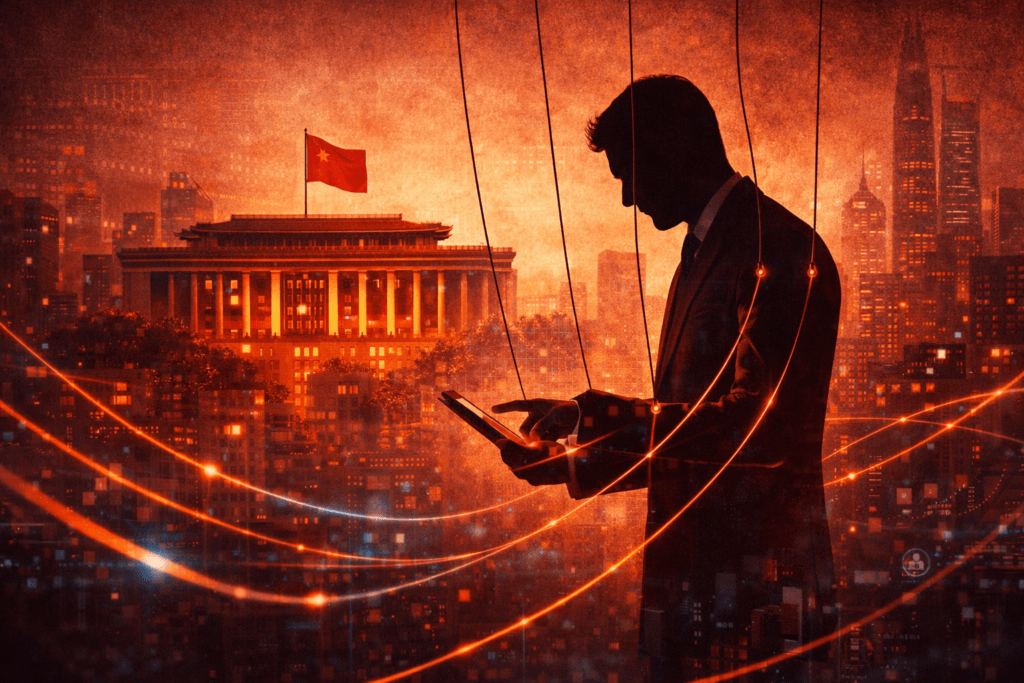
Rather than corporations capturing the state, the state captures—or at least closely supervises—corporations. This does not mean that corporate leaders are powerless; on the contrary, those who successfully align with state priorities can gain immense influence and wealth. But their power is contingent, conditional, and ultimately subordinate to political authority.
This arrangement blurs the line between public and private power. When a corporation acts abroad, it may be perceived not merely as a commercial actor but as an extension of state policy. Conversely, when the state acts, it often does so through corporate vehicles that operate under the guise of market participation.
For individuals and smaller firms, this fusion can be deeply disempowering. Decisions that affect livelihoods, data, and freedoms may be made by large organisations that are insulated from public accountability and legal challenge. Market competition becomes distorted when political alignment, rather than efficiency or innovation alone, determines success.
Technology as a Force Multiplier

Technology plays a crucial role in amplifying the power of China’s state-led model. Advances in artificial intelligence, big data, cloud computing, and telecommunications have created new tools for economic coordination, surveillance, and control.
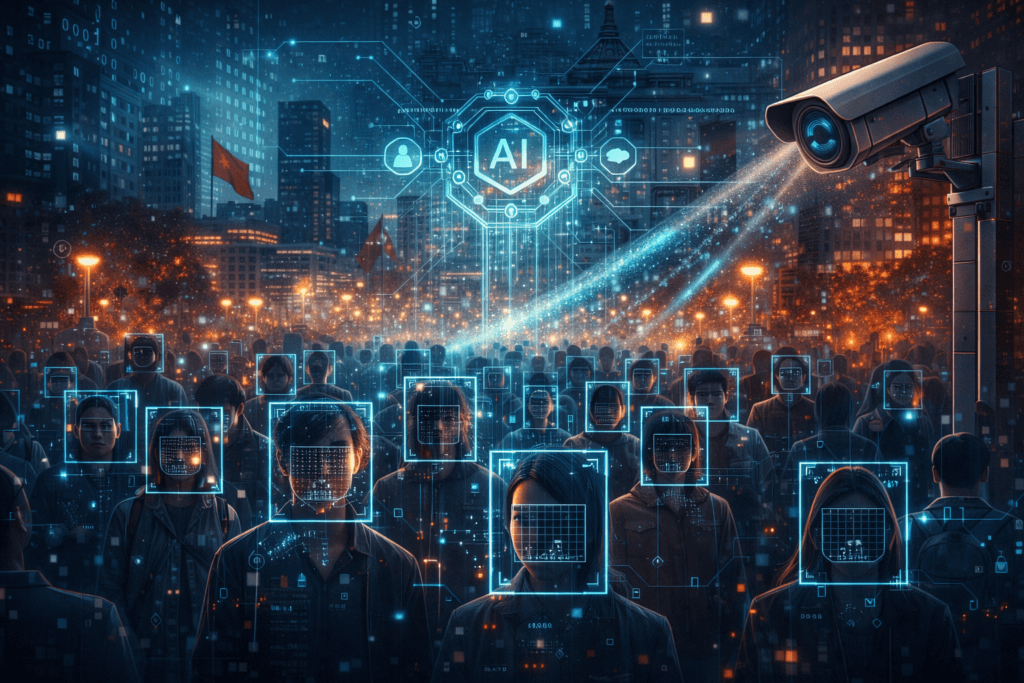
China has invested heavily in these technologies, viewing them as essential to both economic competitiveness and social stability. Facial recognition systems, AI-driven analytics, and pervasive data collection enable unprecedented monitoring of populations and activities. While such systems can improve efficiency and security, they also raise profound concerns about privacy and autonomy.
Large technology corporations are central to this ecosystem. They develop and operate platforms that collect vast amounts of data, often in close cooperation with the state. Legal and regulatory frameworks require companies to share data with authorities and to comply with censorship or surveillance mandates.
As these technologies are exported abroad, they carry with them not only hardware and software but also governance models. Countries that adopt Chinese-built digital infrastructure may find themselves adopting associated practices of data control and surveillance. Corporations that operate these systems gain access to sensitive information and strategic leverage, further concentrating power.
Surveillance, Compliance, and Corporate Compulsion
One of the defining features of China’s governance model is the integration of surveillance into everyday life. Digital tools enable continuous monitoring of communications, transactions, movements, and behaviours. This surveillance state is not only directed at individuals but also at organisations, including corporations.
Companies operating in China must comply with extensive regulatory requirements related to data storage, content moderation, and security cooperation. Failure to comply can result in fines, loss of licenses, or worse. In this environment, corporate autonomy is sharply constrained.
This has two important implications. First, corporations become instruments of state policy, whether willingly or under compulsion. Second, the distinction between private economic activity and political enforcement erodes. When corporations are required to monitor users, censor content, or share data, they effectively participate in governance.
If this model spreads globally, it could normalise a world in which large corporations act as intermediaries of state control. Individuals would interact with platforms that simultaneously provide services and enforce political or social norms, often without transparency or recourse.
Digital Authoritarianism Goes Global
The concept of “digital authoritarianism” refers to the use of digital technologies to monitor, repress, and manipulate populations. China is often cited as a leading example of this approach, combining technological sophistication with centralised political control.
As China exports technology and expertise, elements of this model can be adopted by other states, including those with weak democratic institutions or authoritarian tendencies. Surveillance systems, data analytics platforms, and content control mechanisms can be deployed in ways that reinforce existing power structures.
Large corporations play a key role in this process. They design, sell, and maintain the systems that make digital authoritarianism possible. When these corporations are closely aligned with state interests, their incentives may prioritise political compliance over individual rights.
For individuals, the consequences can be severe: loss of privacy, restricted freedom of expression, and increased vulnerability to manipulation. Economic power becomes intertwined with informational power, leaving citizens with few avenues for resistance.
Implications for Global Markets and Competition

The rise of state-aligned corporate power has significant implications for global markets. Traditional assumptions about competition, transparency, and neutrality may no longer hold in an environment where political backing shapes outcomes.
Firms backed by a powerful state can absorb losses, undercut competitors, and take long-term strategic positions that purely private firms cannot match. This can lead to market concentration and the marginalisation of smaller players.
Moreover, when corporations operate as extensions of state strategy, market interactions can become tools of geopolitical influence. Access to infrastructure, technology, or markets may be conditioned on political alignment, undermining the idea of open and fair competition.
Democratic Norms Under Pressure
Perhaps the most profound concern raised by this model is its impact on democratic norms. Democracy relies on a separation of powers, accountability, and the protection of individual rights. When economic and technological power is concentrated in large, state-aligned corporations, these principles are strained.
Democratic governments may find it difficult to regulate or counter entities that operate across borders and are backed by a powerful state. Individuals may struggle to assert rights against organisations that control essential services and data.
If the global environment increasingly reflects the logic of state-led corporate dominance, democratic institutions may erode not through overt conquest but through the gradual normalisation of centralised control.
Conclusion
The idea that the Chinese government will directly create a world ruled by corporations oversimplifies a far more complex reality. The evidence does not suggest an explicit goal of corporate domination for its own sake. Instead, it points to a system in which state power, economic strategy, and technological control are deeply intertwined.
Within this system, large corporations—particularly those aligned with state priorities—are empowered as instruments of national strategy. As China expands its influence through infrastructure, technology, and markets, this model has the potential to reshape global economic dynamics in ways that disadvantage individuals, weaken democratic norms, and concentrate power.
The challenge for the rest of the world is not merely to compete economically, but to articulate and defend alternative models that preserve individual rights, fair competition, and democratic accountability. The future global order will be shaped not only by who builds the most infrastructure or controls the most data, but by which values ultimately govern the relationship between the state, corporations, and individuals.
Leave a Reply