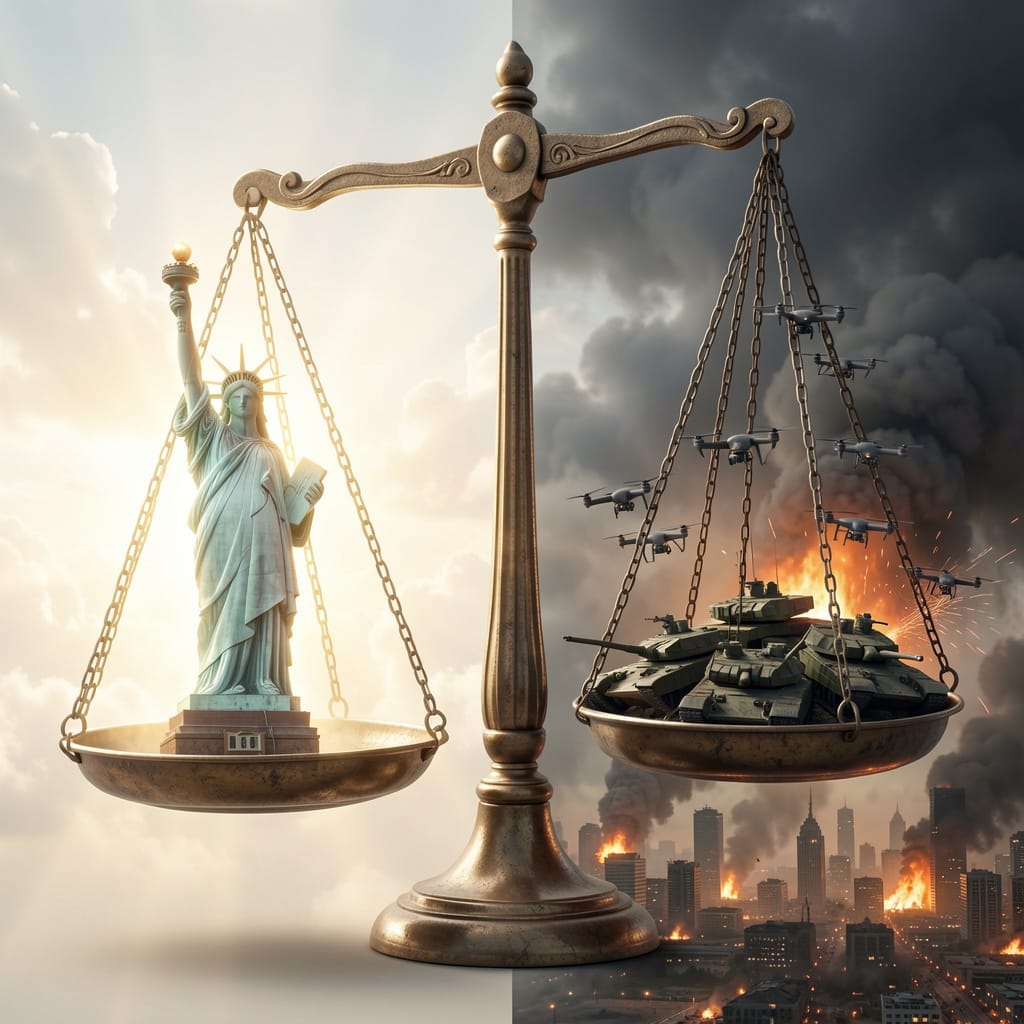
In the modern international system, sovereignty is often treated as a near-sacred principle. It is the invisible boundary line that shields governments from external interference, the doctrine that preserves territorial integrity, and the justification invoked sometimes sincerely, sometimes conveniently—when the suffering of a population is met with international hesitation rather than action. Yet, as global events repeatedly demonstrate, sovereignty can also function as a shield behind which governments act with impunity. Nowhere has this tension been more starkly illustrated than in Iran, where the state’s response to internal dissent has raised profound questions about whether the rights of citizens are being subordinated to the preservation of regime power.
At the same time, the policies of the United States both historically and in the present reveal a complex and sometimes contradictory approach to sovereignty. Washington has, at various times, championed democratic values while simultaneously intervening in, undermining, or outright opposing governments it deems hostile. The resulting contrast between rhetoric and action adds another layer to the global debate: when is sovereignty respected, and when is it overridden?
The situation becomes even more complex when one considers the current strategic caution surrounding the Strait of Hormuz. Despite escalating tensions, the world’s major powers have largely avoided direct military escalation in this critical region. Why? One plausible explanation lies not only in conventional military risks, but in the shadowy realm of asymmetric warfare specifically, the fear that dormant terrorist networks could be activated in response to overt conflict.
This article explores these intertwined themes: sovereignty versus human rights, Iran’s internal repression, the United States’ historical and ideological posture, and the strategic calculations that may be restraining global powers today. Ultimately, it argues that while contradictions abound, there remains a coherent if contentious position for the U.S.A., particularly in light of concerns over nuclear proliferation and regional security.
Iran: Sovereignty as a Shield Against Accountability
The Islamic Republic of Iran has, for decades, asserted its sovereignty as a foundational principle of its governance. This stance is neither unusual nor inherently problematic; all states rely on sovereignty to function within the international system. However, the application of this principle becomes deeply controversial when it is used to justify or deflect criticism of state violence against its own population.
In recent years, Iran has witnessed waves of protests driven by economic hardship, political repression, and social restrictions. Demonstrations have often been met with force, including arrests, detentions, and, in some cases, lethal measures. The government’s position has been consistent: these are internal matters, and foreign powers have no right to interfere.
From a purely legal standpoint, this argument carries weight. International law, as codified in the United Nations Charter, places a strong emphasis on non-interference in the domestic affairs of sovereign states. Yet this framework increasingly clashes with evolving norms around human rights, particularly the idea that governments have a responsibility to protect their populations.
The tension here is stark. If sovereignty is absolute, then external actors must stand aside even in the face of significant human rights abuses. If, however, sovereignty is conditionally dependent on a state’s treatment of its citizens, then the door opens to intervention. Iran’s leadership has firmly aligned itself with the former interpretation, prioritising regime stability over external perceptions.
Critics argue that this approach effectively elevates the state above the people it is meant to serve. In this view, sovereignty becomes less about national self-determination and more about the preservation of power structures. Supporters, however, counter that external interference often exacerbates instability and undermines genuine reform.
The United States: Ideals and Interventions
The United States presents a contrasting, though not necessarily consistent, case. American political culture is deeply rooted in ideals of liberty, democracy, and individual rights. These principles have frequently been invoked to justify foreign policy decisions, including interventions aimed at promoting or defending democratic governance.
However, history complicates this narrative. During the Cold War, the United States supported a number of regimes that were far from democratic, so long as they aligned with its strategic interests. In other cases, it actively intervened to remove governments perceived as hostile, whether through covert operations, economic pressure, or direct military action.
This duality reflects a broader tension within U.S.A foreign policy: the balance between idealism and realism. On one hand, there is a genuine commitment to democratic values. On the other hand, there is a pragmatic recognition that global politics often involves difficult trade-offs.
In the context of Iran, this tension is particularly pronounced. The United States has long opposed the Iranian regime, citing concerns over human rights, regional destabilisation, and nuclear ambitions. At the same time, it has largely refrained from direct military intervention in response to internal repression.
This restraint may be interpreted in several ways. Critics might argue that it reflects inconsistency or the selective application of principles. Supporters, however, could contend that it demonstrates a recognition of the risks associated with intervention, particularly in a region as volatile as the Middle East.
Sovereignty Versus Human Rights: An Unresolved Debate
The broader issue at play is the unresolved tension between sovereignty and human rights. This is not a new debate, but it has taken on renewed urgency in an era of instant communication and global awareness.

On one side are those who argue that sovereignty must remain paramount. Without it, the international system would descend into chaos, with powerful states intervening at will under the guise of humanitarianism. On the other side are those who believe that sovereignty should not serve as a shield for abuse, and that the international community has a moral obligation to act when governments fail their people.
Iran’s situation highlights the difficulty of finding a middle ground. External intervention risks escalation and unintended consequences, while inaction can be seen as tacit acceptance of repression. The result is a form of strategic paralysis, where outrage is expressed but decisive action is avoided.
The Strait of Hormuz: A Flashpoint of Global Caution
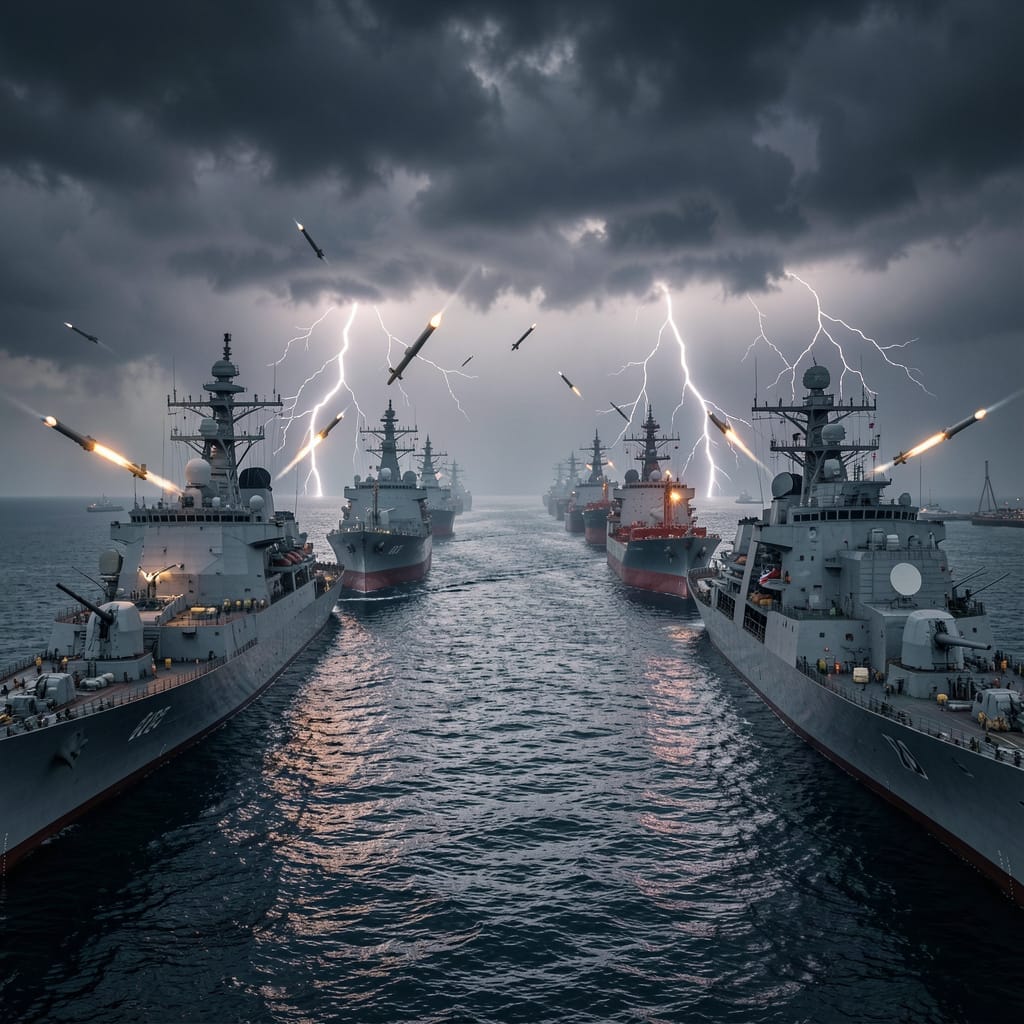
The Strait of Hormuz is one of the most strategically महत्वपूर्ण waterways in the world. A significant portion of global oil supply passes through this narrow channel, making it a critical artery for the global economy. Any disruption here would have immediate and far-reaching consequences.
Given its importance, one might expect a strong military presence and a willingness to act decisively in the face of threats. Yet, despite periodic tensions involving Iran, there has been a notable reluctance among major powers to escalate militarily.
This caution is not merely a matter of avoiding conventional conflict. It reflects a deeper awareness of the complexities of modern warfare, particularly the role of asymmetric tactics. Iran has demonstrated capabilities in areas such as missile technology, cyber operations, and proxy networks.
One of the more speculative—but plausible—factors influencing global restraint is the fear of activating terrorist sleeper cells. In an interconnected world, conflict is no longer confined to battlefields. It can manifest in cities, infrastructure, and civilian populations far from the front lines.
If a major military confrontation involving Iran were to occur, it is conceivable that affiliated or sympathetic groups could carry out retaliatory attacks in various parts of the world. This possibility adds a layer of risk that is difficult to quantify but impossible to ignore.
The United States, in particular, has experience with this kind of threat. The events of the early 21st century fundamentally reshaped its approach to security, leading to a focus on counter-terrorism and preemptive measures. These experiences likely inform current decision-making, contributing to a cautious approach in regions like the Strait of Hormuz.
American Strategy: Measured Pressure Over Direct Conflict
Rather than direct military intervention, the United States has often opted for a strategy of measured pressure. This includes economic sanctions, diplomatic efforts, and targeted actions aimed at limiting Iran’s capabilities.
Critics argue that such measures can harm ordinary citizens while failing to achieve meaningful political change. Supporters, however, see them as a way to exert influence without triggering the risks associated with full-scale conflict.
This approach reflects a broader shift in how power is exercised. Military force remains a key component, but it is increasingly complemented—or replaced—by economic and technological tools. In the case of Iran, this strategy is aimed not only at addressing human rights concerns but also at preventing the development of nuclear weapons.
The Nuclear Question: A Defining Concern
At the heart of the international community’s concern with Iran is its nuclear program. While Iran maintains that its activities are for peaceful purposes, many observers remain sceptical. The potential for nuclear weapons development introduces a level of risk that extends far beyond regional politics.
For the United States and its allies, this is a defining issue. The prospect of a nuclear-armed Iran raises concerns about regional stability, proliferation, and the potential for catastrophic conflict. In particular, there are fears that such capabilities could be used against Israel or leveraged in ways that destabilise the broader Middle East.
Some analysts also raise the possibility of a “dirty bomb”—a device that uses conventional explosives to disperse radioactive material. While less destructive than a nuclear weapon, such a device could still cause significant harm and panic.
These concerns provide a key rationale for the United States’ position. From this perspective, the goal is not merely to oppose a particular regime, but to prevent a scenario that could have devastating consequences on a global scale.
A Case for the U.S. Position
Despite the inconsistencies and criticisms, there is a coherent argument in favour of the United States’ approach. At its core is the idea that preventing nuclear proliferation and maintaining regional stability are paramount objectives.
The use of sanctions, diplomatic pressure, and strategic restraint can be seen as an attempt to navigate a complex landscape where the costs of action and inaction are both high. While this approach is not without flaws, it reflects a recognition of the limits of military power in addressing deeply rooted political and social issues.
Moreover, the emphasis on preventing nuclear development aligns with broader international norms. Even critics of U.S. policy often agree that the spread of nuclear weapons poses a serious threat.

Conclusion: Between Principle and Pragmatism
The interplay between sovereignty, human rights, and international intervention is one of the defining challenges of our time. Iran’s handling of internal dissent highlights the potential for sovereignty to be used as a shield against accountability. At the same time, the United States’ policies reveal the difficulties of balancing ideals with strategic realities.
The cautious stance in the Strait of Hormuz underscores the complexity of modern conflict, where the risks extend far beyond conventional warfare. The possibility of asymmetric retaliation, including the activation of sleeper cells, adds a layer of uncertainty that shapes decision-making at the highest levels.
In the end, the situation defies simple conclusions. Sovereignty remains a cornerstone of the আন্তর্জাতিক system, but it is increasingly contested by evolving norms around human rights. The United States’ approach, while imperfect, reflects an محاولة to reconcile these competing demands while addressing the pressing issue of nuclear proliferation.
Whether this balance can be maintained—and whether it will ultimately lead to a more stable and just world—remains an open question. What is clear, however, is that the stakes could hardly be higher.
limits of military power in addressing deeply rooted political and social issues.
Moreover, the emphasis on preventing nuclear development aligns with broader international norms. Even critics of U.S. policy often agree that the spread of nuclear weapons poses a serious threat.
Conclusion: Between Principle and Pragmatism
The interplay between sovereignty, human rights, and international intervention is one of the defining challenges of our time. Iran’s handling of internal dissent highlights the potential for sovereignty to be used as a shield against accountability. At the same time, the United States’ policies reveal the difficulties of balancing ideals with strategic realities.
The cautious stance in the Strait of Hormuz underscores the complexity of modern conflict, where the risks extend far beyond conventional warfare. The possibility of asymmetric retaliation, including the activation of sleeper cells, adds a layer of uncertainty that shapes decision-making at the highest levels.
In the end, the situation defies simple conclusions. Sovereignty remains a cornerstone of the আন্তর্জাতিক system, but it is increasingly contested by evolving norms around human rights. The United States’ approach, while imperfect, reflects an محاولة to reconcile these competing demands while addressing the pressing issue of nuclear proliferation.
Whether this balance can be maintained—and whether it will ultimately lead to a more stable and just world—remains an open question. What is clear, however, is that the stakes could hardly be higher.
Leave a Reply